
Review: Final Fantasy 1 Pixel Remaster
Reliving an early epic

I’m at home and I’m drinking coffee. The following was posted on the most excellent blog Postcoards From the Edge of Reason earlier this year. Here I resent it to you, my dear readers, for your perusal. I added some more thoughts at the end for those that have read it before.
Holding a cup of java, I think back on the past and the games I played. I’ve been sick, really sick and every time I come down with something that keeps me more or less bed ridden, I get a particular urge. I’m not sure why this happens, but this seem to be prime time for me to play old school Japanese Role Playing Games. It might be the turn based combat or the grind, or maybe it’s just nostalgia that blasts the cracks of my fogged mine. Lying in bed, shivering with cold and swearing with heat, the sickness had me and this time I had a Steam Deck and a pack of Final Fantasy games in my back catalog. So, I started playing the Pixel Remaster version of Final Fantasy 1.
And I ended up beating it.
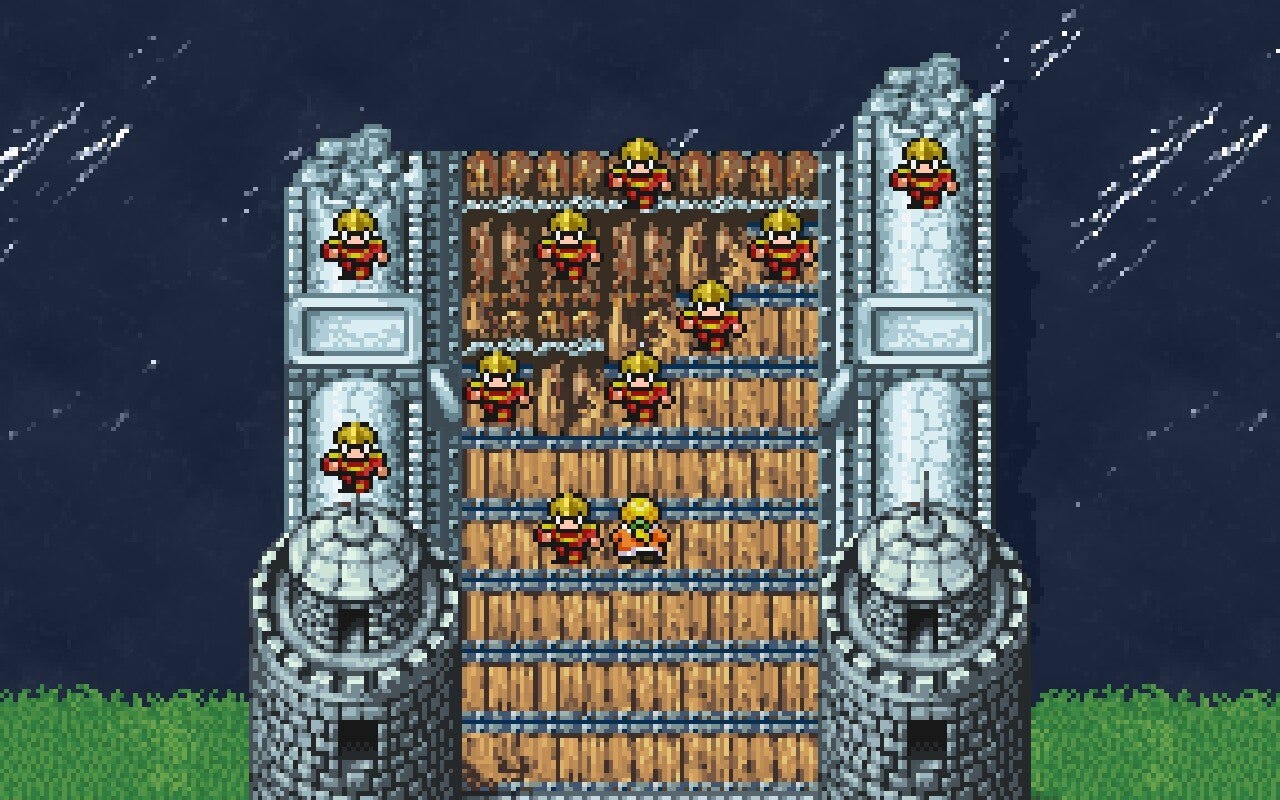
Final Fantasy is the first game in a long running series, one that now has 16 main entries and a host of spin-offs and side entries. Final Fantasy is the game that started it all, the project that would’ve sunk a studio if it didn’t do well. Obviously it did, since we are now 36 years from it’s release.
The Pixel Remaster is the latest re-release of the first game and is part of a remake of first six games. These games are a ground up rebuild of the original using the Unity game engine. With this rebuild, Final Fantasy drops the 8-bit visuals of the original and adopts a 16-bit style of the later sequels. The visuals aren’t the only changes made, these include a save anywhere feature, auto-battle and access to dungeon maps. The game also provides a bestiary, a jukebox for music and achievements.
I didn’t just beat the game; I got all the achievements as well.
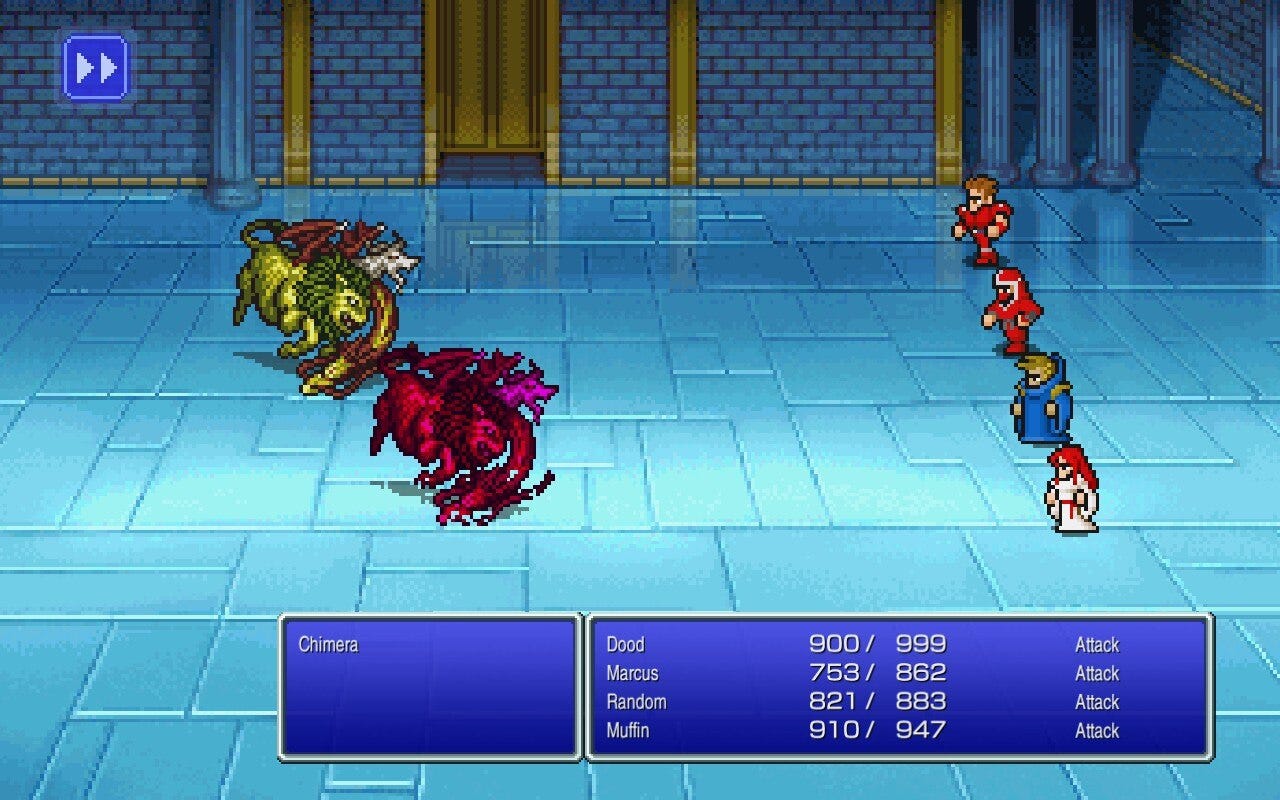
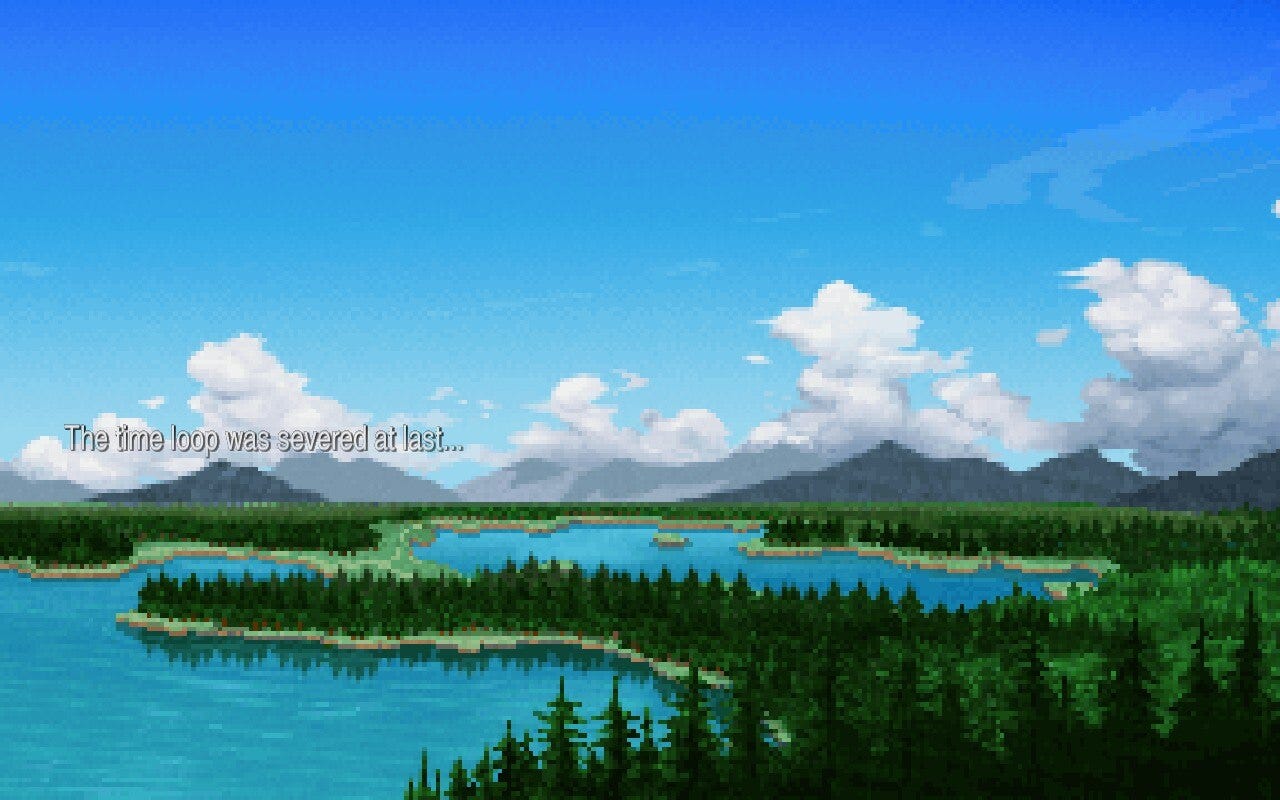
I like the visuals of this new release. They are bright and colorful, pleasant to look at and tickle my nostalgic fancies. I’ve always though the 16bit console era showed the beauty of pixel art well, and this does a good job of showing that off. Everything is High Res and widescreen. I played through this game on a Steam Deck and the screen showed off the graphics well. From wondering around the town and castles, to exploring the world and dungeons, it is all represented in a highly detailed and well made environments. The graphics for the battles are redone as well. Gone are the black backgrounds of yore, replaced with larger widescreen backgrounds somewhat representing where the battle takes place on the map. For instance: if the battle takes place in a swamp area, the background during the battle will be swampy. If it is a high-tech flying fortress, the battle background will be more industrial and science like.
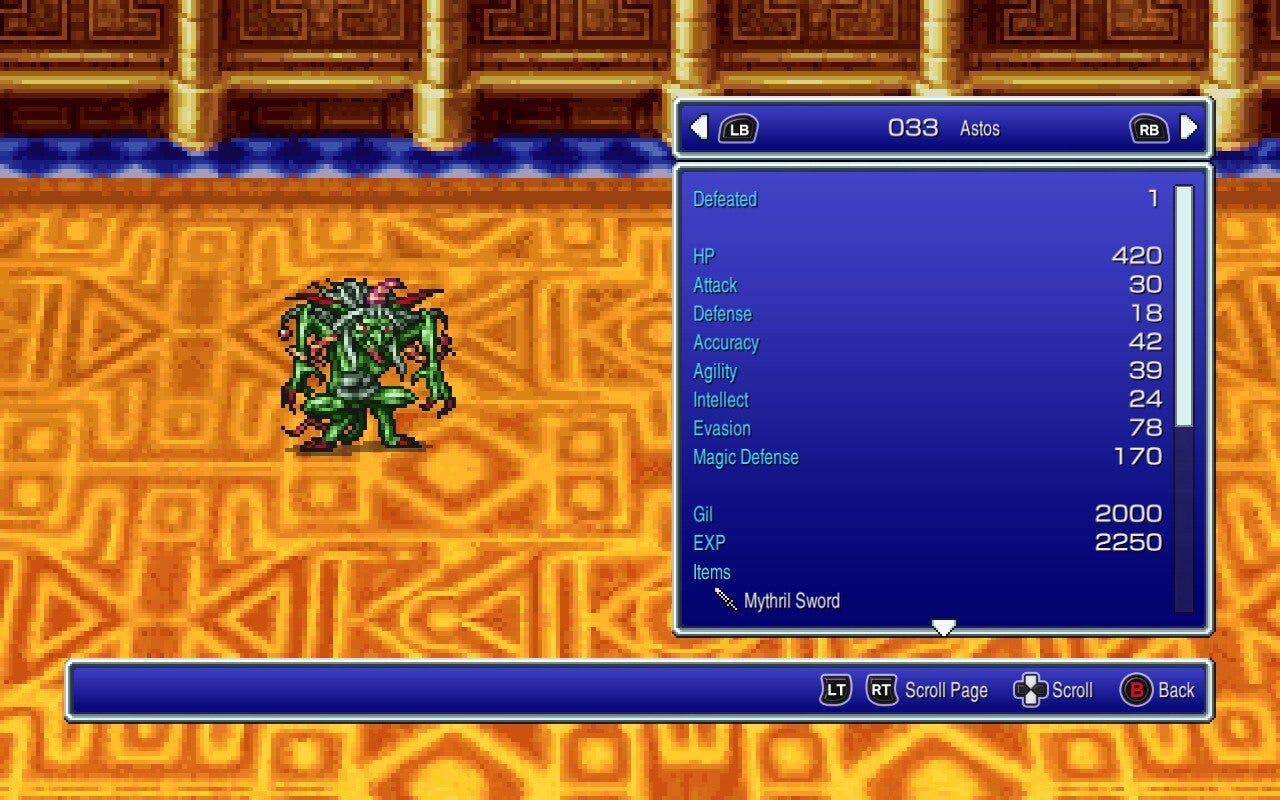
I particularly like the art used for the enemies in the game. Although the enemies are mere statues, locked in place with nary a movement, they do flash and emit spell animation from time to time. However, the art for the enemies is wonderfully rendered in their pixilated goodness. I remember that I loved the art in the NES classic when I was but a child, so I am not surprised in this.
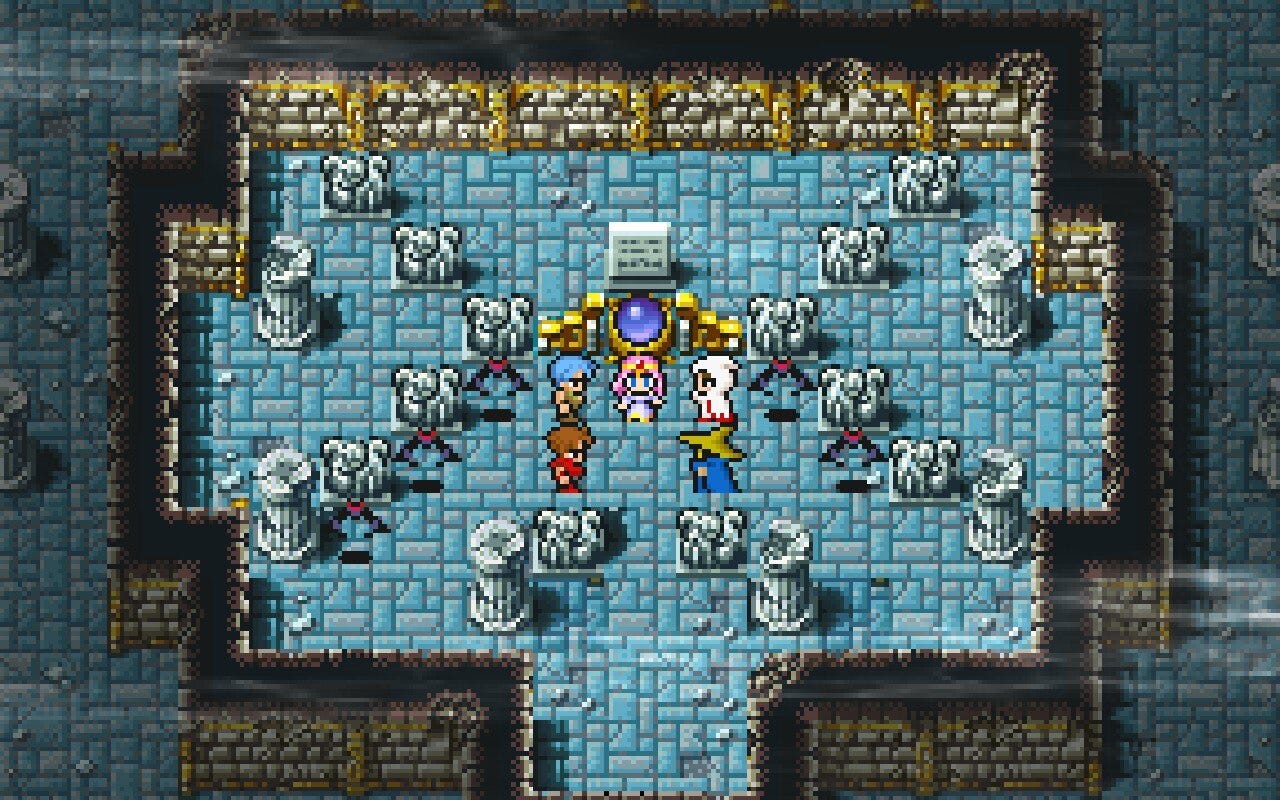
The design used for the party members and all the other NPCs in the game are also rendered well. They are animated with more than two frames of animation, which is great to see. The NPCs that wonder the towns, castles and dungeons of the world all seem excited to be alive. I guess if I lived in a world like this, I’d be excited to make it from day to day as well. The party members are good at celebrating themselves, each one doing a happy dance upon slaying of another foe. The animations are good for this and provide a reason to smile when a battle is won. All the visuals from the Player Characters to the NPCs, backgrounds, buildings and such do a good job of copying the original designs. It just looks like the game was created for the SNES instead of the NES.
The one area that isn’t really improved, graphically speaking, is the font. It is a bit sterile and modern and doesn’t seem to reflect the spirit of the original game. There are mods that can be used to replace the font, but I didn’t use those. I understand that the console version of the Pixel Remaster package has a way to-chose which font can be used, but those changes have not made it to the PC version at the time of this writing. That being said, I did get used to the font and it isn’t a deal breaker, but it is something I noticed.
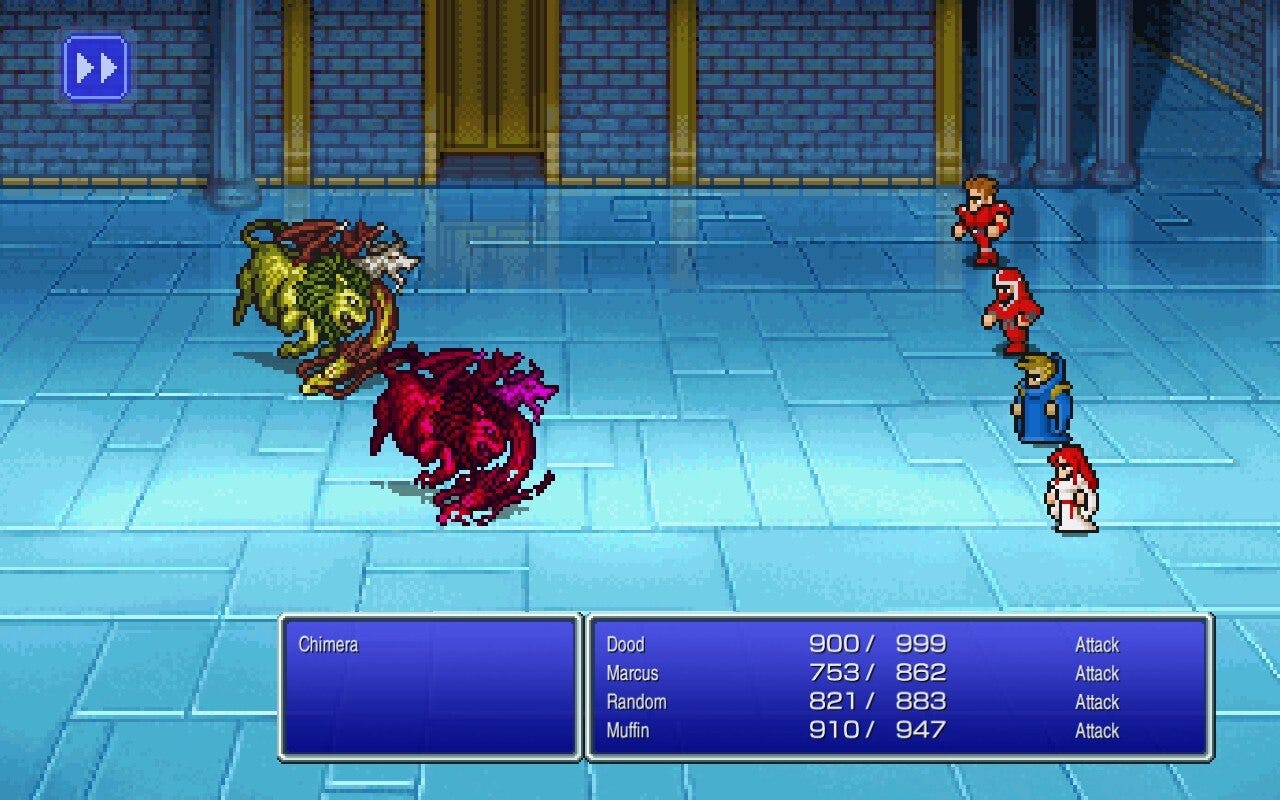
The game play itself hasn’t changed much in 36 years. This is an old school JRPG. A party is created, the party talks to NPCs, buys gear and magic, and goes out into the field to delve dungeons and advance the plot. Along the way, the party fights many a monster in a turn-based fashion. The monsters line up on the left of the screen and the party on the right. Each takes turn bashing each other or using magic, in an effort to bring the other’s Hit Points down to zero. The first group that does this, wins.
It’s not exactly a difficult game. I don’t recall if the original taxed me at all, being as I was a child at the time I played, but this one didn’t really tax me either. I had one party wipe in the entirety of the game, and that is because I became a little too confident towards the end. I was killed by the rare monster War Mech as I approached the final crystal.
Don’t worry, I reloaded a save, found the monster again and beat him down.
The music was great too. The soundtrack recording might or might not be new. I can’t tell if these are pulled from old releases or rearranged specifically for this release. It really doesn’t matter because all them music in this game sounds spectacular. One of the high points of using a Steam Deck to play this game is that it has really good speakers on it. The music flowed from it as I played Final Fantasy and it helped pull me into the game. For anyone that has played a Final Fantasy game in the last 30 years, many of the tracks will be familiar. Yet, hearing the arrangement in this game was a joy and none of the tracks became old.
My favorite track is the classic Prelude. Also known as The Crystal Theme. I’ve always loved this tune.
The sound effects are good as well. If they are not the same as the original, the effects do a good job of mimicking them. This includes the classic menu sound, the sounds of spells, talking to NPCs and so many more. The effects are clear and to the point. Along with the music, they help add a level of immersion that sucked me into the game.
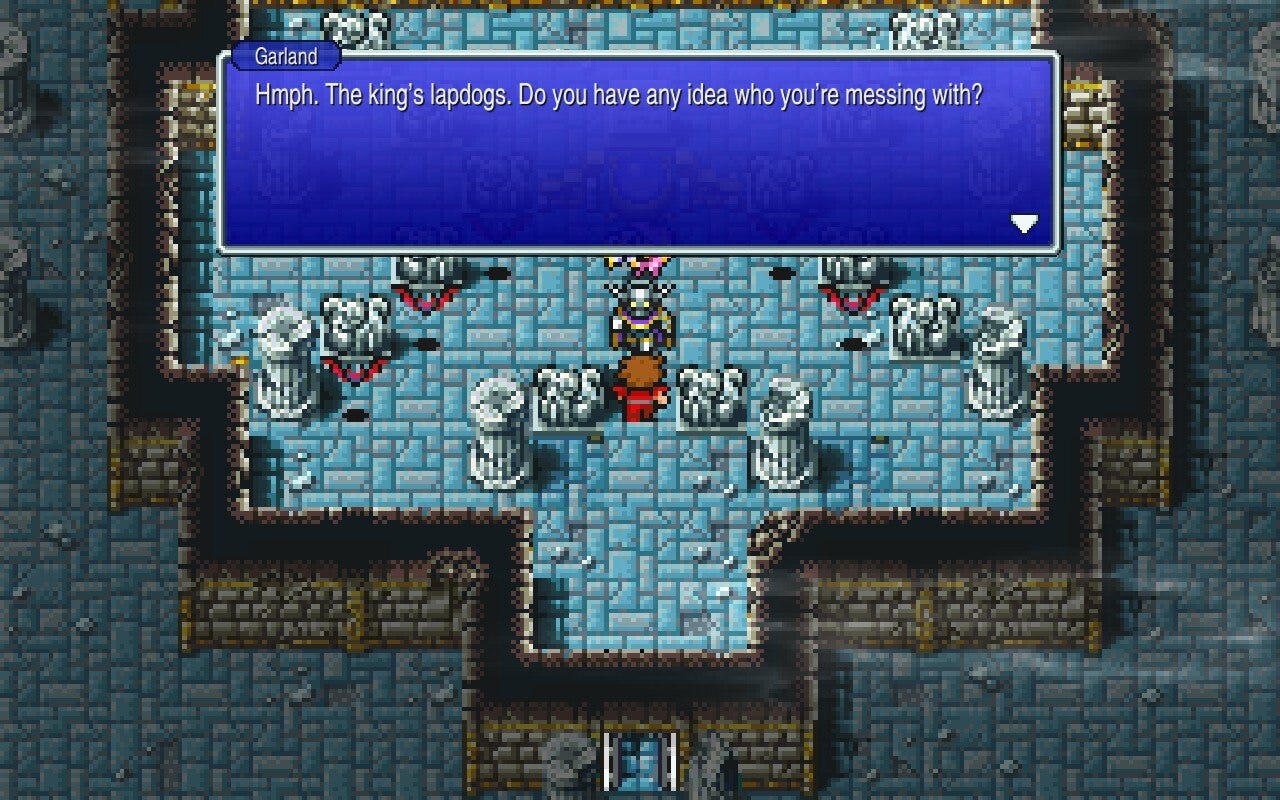
What about the story? Role Playing Games are supposed to have deep and immersive stories, correct? Not this one. It is a very early example of a JRPG and the story is a bit light. It involves four Warriors of Light appearing to help rescue the fabled crystals and restore the land. Beyond that? There isn’t much story to speak of. A bit of the lore is scattered throughout the land as the PCs talk to the NPCs. There is enough lore to be learned to keep it interesting, but the plot isn’t what I’d call Cohesive. I don’t know if this is just because of how it is translated into English or if it was like this in the original Japanese as well. However, the player does end up visiting various unique areas and talking to many a character. This is a better translation than the original since I did pick up on some details I didn’t when I played this the first time. For Instance: As a kid, I thought the party went into space and into a space station dungeon. It’s actually a flying fortress in the sky. It helps that the graphics are rendered a bit different to reflect that as well.
I bought the pixel remaster package when it was released on Steam. I didn’t really start playing it until a couple of weeks ago. Although there are many versions of the original Final Fantasy in the wild, this one isn’t a bad way to play the original game. I don’t know if it is the definitive version, since I haven’t played all the others and can’t comment on what is change and what hasn’t, I can recommend this. Just remember it is an old school JRPG with all the elements connected to that. It has grinding, random encounters, menus and magic that works in a way that might not be expected. However, it’s also a joy to look at, a sympathy for the ears and highly engrossing. I found it easy to understand why this series has lasted long after many of its peers after playing through this.
After I wrote this in January, there was an update that added a lot of good quality of life improvements to the entire pixel remaster series. This added all the changes brought into the Console versions of the game, including changing the font, an ability to change soundtracks, adding different settings like more gil and experience and other changes. I’m glad I played the game as I did, but I do welcome the changes for those that want them. I’m playing through Final Fantasy II Pixel Remaster and hope to have that review up next week.